7 Psychology of Stretching – Myths, Relationships and the Path to a Relaxed Body 🧠
Welcome to the seventh part of our Stretching Guide. Previous articles covered technique, safety and toy selection. This one covers something that gets far less attention – your mind. Stretching is largely a psychological practice. Your body is ready to progress long before your brain gives it permission. 🧠
The Biggest Myth: "I'll Be Permanently Stretched" 🛡️
This is the most common fear – and one of the most persistent anatomical misconceptions in sexual health.
The vagina is a muscle, not a rubber band. A rubber band stretches and stays stretched. Muscle works differently – it trains, adapts, and when trained correctly, can be both flexible and strong at the same time.
Stretching trains the muscle's ability to release – its flexibility and range of motion. Kegel exercises train the muscle's ability to contract – its tone and strength. These are two sides of the same coin, not opposites.
The result of a well-balanced training routine: you can take a large diameter and still grip your partner tighter than before during regular sex. Pelvic floor muscles that are regularly trained are stronger and better supplied with blood – which directly affects orgasm intensity and the overall quality of intimacy.
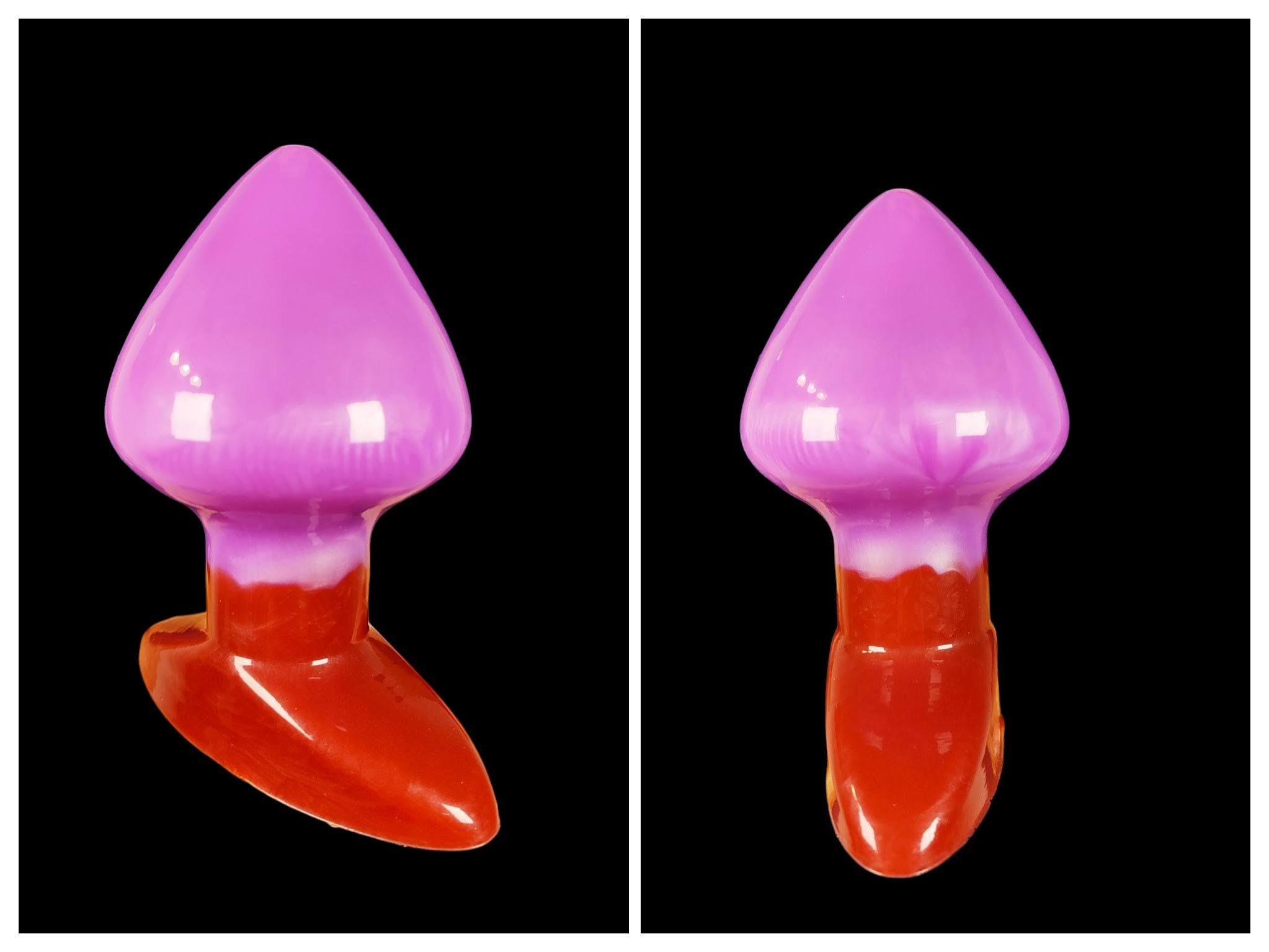
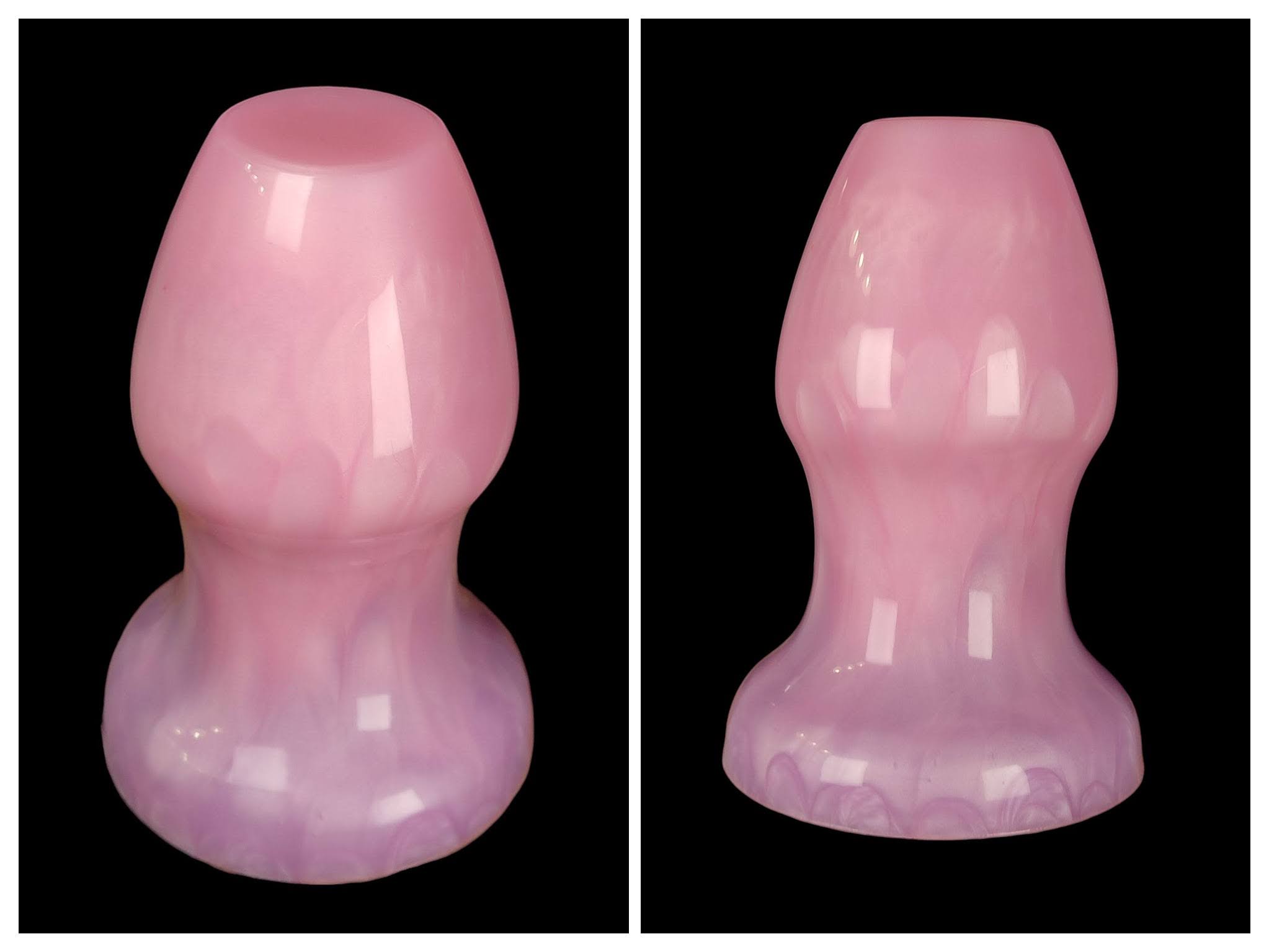
If you feel that penetration lacks intensity after stretching training, our DoubleJoy was specifically designed for this situation – it stays inside during penetration and increases sensation for both partners.
Kegel Exercises: Your Most Important Training Companion 💪
Kegel exercises strengthen the pelvic floor muscles – the same muscles that work during stretching. Regular practice is an essential part of any stretching routine, not an optional extra.
How to do them:
- Find your pelvic floor muscles – these are the ones you use to stop urination mid-flow.
- Contract them, hold for 3–5 seconds, then fully release.
- Start with 10–15 repetitions three times a day.
- Gradually increase the hold time to 10 seconds.
When: Anytime, anywhere – watching TV, at your desk, commuting. No equipment needed, nobody can tell.
Why they matter: Strong pelvic floor muscles mean better circulation, more intense orgasms and faster recovery after demanding sessions. They're the same muscles working during stretching – the stronger and better-supplied they are, the more effectively and safely you train.
Why Does My Partner Want This? 🤝
This question comes up often – and the answer is more complex than "they want more space."
Partners are typically drawn to a combination of things:
The visual aspect. For many people, watching a partner open up is intensely erotic. It's intimate in the most fundamental sense – you're witnessing something normally hidden.
Trust and surrender. Stretching requires deep trust. Allowing a partner to work with your limits, being vulnerable in that way – it deepens intimacy in a way that regular sex rarely does. Many couples describe feeling closer after shared training than at almost any other time.
Shared fantasies and goals. Fisting, double penetration, visual play – stretching opens the door to experiences that require preparation. For a partner, being part of that journey matters.
What if you're not sure you want it yourself? First, find your own motivation. Stretching done purely for someone else, without personal interest, rarely works – the body won't release if the mind isn't present. If the topic interests you even slightly, try starting alone, at your own pace, and discover what it brings you. Read Article 1 – you might find a reason that's genuinely yours.
What Will It Bring Me? ✨
Beyond the physical (larger diameter, different sensations), stretching has deeper dimensions:
A better relationship with your body. Training teaches you to listen to your body's signals – when to push, when to stop, what works. Gradually, the body stops feeling like an obstacle and starts feeling like a collaborator.
Confidence. Moving your own physical limit – whatever it is – is a powerful experience. Many people find that after some time training, they feel more confident not just in intimate situations, but generally.
More intense sensations. Stronger muscles and better pelvic circulation mean stronger orgasms. Stretching also reveals sensitive areas that tension normally masks – as if a new map of pleasure becomes accessible.
Physical health benefits. For women experiencing pain during penetration (vaginismus, dyspareunia), gradual stretching can help significantly. For pregnant women, preparing the pelvic floor may ease birth and recovery. Always consult your doctor or midwife.
Fear and Shame – A Normal Part of the Journey 🌿
Many people begin with feelings of shame – "what would people think", "is this normal", "what if my partner found out". These feelings are normal and say nothing negative about you.
A stretching community exists – on Reddit, X (Twitter) and in private groups. People of all levels, ages and orientations. You are not alone and your interest is not unusual.
Tips for moving past shame:
- Start alone, in private, without a partner's involvement or expectations.
- You don't owe anyone an explanation – it's your body and your choice.
- Read others' experiences – the community is surprisingly open and supportive.
Solo vs. With a Partner – Different Psychological Dynamics 🧘♀️
Solo training is about self-discovery. You have full control, you move at your own pace, you explain nothing to anyone. It can be meditative – listening to your body without external interference. Many people find solo sessions more effective because they're fully present.
Training with a partner adds an emotional dimension – trust, surrender, shared intensity. It also adds complexity: you need to communicate clearly, you need to trust, you need to be ready to stop or continue based on mutual signals.
A combination that works well for many couples: solo training as the foundation, shared training as an occasional intentional experience. One doesn't replace the other.
Plateaus and Frustration – When Progress Stops 📉
Anyone who trains for longer will experience periods where nothing seems to work. Weeks without movement. A toy that was easy last time suddenly won't go in at all.
Why this happens:
- Stress, fatigue and poor sleep directly increase pelvic floor tension.
- The body needs time to consolidate gains – progress is never linear.
- Pushing too hard can cause micro-tears that the body then protects with tension.
What helps:
- Take a break of 1–2 weeks and return fresh.
- Train after orgasm – the body is naturally more relaxed.
- Drop one size and focus on technique rather than achievement.
- Add Kegel exercises – stronger muscles release more willingly.
- Stop comparing yourself to others. Every body is different and every timeline is individual.
Your Mind Stops You Before Your Body Does 🧠
This may be the most important thing in this entire article: your brain is your biggest limitation – and your greatest ally.
Fear activates defence mechanisms. Stress causes muscle tension. If you approach a session with anxiety or the pressure of "I need to achieve this today", your body will close down.
Conversely – when you approach with curiosity and no expectations, the body opens. The most successful sessions are almost always the ones you enter without a specific goal.
Practical tips:
- Create a ritual – the same music, the same temperature, the same position. The brain learns to associate these cues with safety and release.
- Breathe consciously – deep abdominal breathing activates the parasympathetic nervous system and directly reduces pelvic floor tension.
- Talk to yourself kindly. "I can't do this" or "it's not working" are not helpful. "I'm exactly where I am, and that's fine" – is far more effective.
Conclusion: Your Pace, Your Rules 🐢
Stretching is a personal journey – and like any journey, it has peaks and valleys. It is not a competition, it is not a performance and it is not something you need to justify to anyone.
Whatever your motivation – curiosity, a partner's wish, your own fantasy or a physical need – the most important thing is that you do it for yourself, at your own pace and with respect for your body.
Have questions, stories or topics you'd like us to cover? Write to us – we're always happy to help personally. 📩
Frequently Asked Questions ❓
Will I be permanently stretched after training? No. The vagina is a muscle, not a rubber band. When you combine stretching with Kegel exercises, you develop both flexibility and strength. The ability to take a large diameter and the ability to grip firmly during sex are not opposites – they train in parallel.
How do I talk to my partner about stretching? Start from your own motivation, not their desire. What could it bring you? If you go into the conversation with your own reason, it's easier to stay authentic. If your partner is pushing and you're not ready, it's perfectly valid to say: "I'm interested, but I need my own time."
Can stretching improve my sex life? Yes – in multiple ways. Stronger pelvic floor muscles, better circulation in the area and greater body awareness all directly translate to more intense orgasms and greater confidence in intimate situations.
How long until I see results? This varies widely – weeks to months, depending on your starting point, training frequency and ability to relax. The larger the diameter you're working toward, the slower the progress. Patience is genuinely the key ingredient.
Is it normal to feel vulnerable during training? Yes, very common. Stretching touches an intimate part of both your body and your psychology. Mixed feelings, vulnerability and uncertainty are normal responses. Listen to yourself and don't push past limits you're not ready for – physical or emotional.
Continue Reading 📚
- 1 — Benefits and Reasons for Stretching
- 2 — How to Start with Stretching – A Practical Guide for Beginners
- 3 — Choosing the Right Toy, Material, and Lubricant
- 4 — Stretching Styles and Techniques
- 5 — Safety, Hygiene, and Lubrication
- 6 — Advanced Practices – Fisting, Double Penetration, Prolapse
Or go back to the full Stretching Guide overview.
.jpg)
.jpg)